
Every year on 20 May, we celebrate World Bee Day, which was proclaimed by the UN in 2018. This day was chosen because it corresponds to the birth of Anton Janša, a pioneer of modern beekeeping. It was established to raise global awareness of the importance of bees, those foragers that produce honey with various properties (antiseptic, anti-inflammatory, healing, etc.) that humans love just as much as birds, insects, bears, and other animals.
The beneficial bee
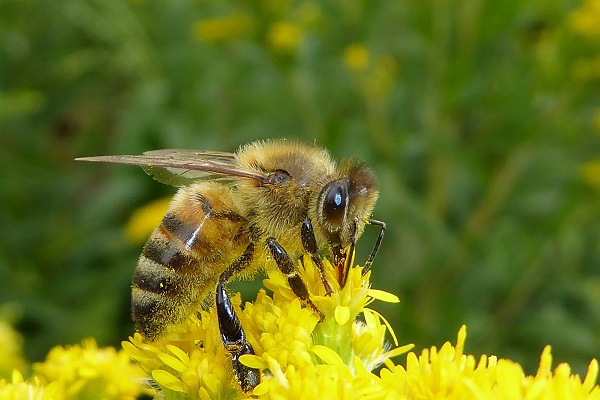
Bees are very common on planet Earth and essential to the development of ecosystems. In fact, they carry out 80% of pollination, which contributes to the reproduction of flowering plants. While these foragers play a major role in the life of plants, they are also important to our survival, as 75% of the food we consume depends on bees and their pollination.
However, over the years, bees have become increasingly threatened and are fighting for their very survival. The excessive use of pesticides, in particular, is contributing to the exponential decline in bee populations, leading to a depopulation of hives and, consequently, less effective pollination.
Global warming and bees
Another major factor in the disappearance of bees is global warming. The seasons are different every year, arriving earlier or later, and this affects the development of flora and fauna. Flowers develop differently, which confuses bees because they use their sense of smell to associate a scent with a plant in order to forage and, above all, remember where they have foraged. If the plant grows differently, its scent is different, and the bees become disoriented and no longer know which plant they have foraged on. Pollination is therefore compromised.
Global warming also causes other damage, such as flooding during heavy rainfall or, conversely, fires caused by widespread drought. This violently destroys beehives and rapidly decimates bees, which find themselves trapped in their hives, unable to defend themselves.
Pollution of all kinds
Pollution is another factor contributing to the destruction of bees, whether it be air, soil or water pollution, all of which pose a threat to bees. But another form of pollution is attacking beehives: electromagnetic wave pollution. Research has shown that telephone calls made near beehives influence the noise bees make in their hives. One study revealed that when two telephones were placed near a hive, the bees began to produce much higher-pitched sounds, as if calling for help and warning that their home was under attack and that they needed to flee urgently.
Bee-killing insects
It is not only humans who harm bees; other insects are just as dangerous. This is the case with the Asian hornet, which has been present in our regions for around fifteen years. Asian hornets are particularly fond of the sweet flesh of bees. They remain close to hives and capture foragers returning laden with pollen. If the hive becomes sufficiently weakened, they will not hesitate to enter it directly and destroy everything inside.
Another devastating species that feeds on bee larvae is the varroa mite. The varroa mite is a parasitic mite similar to the human louse that develops directly in the cell or grows on the larva. It lays between 2 and 8 eggs per cell. Within a few days, the hive becomes infested.
Protective measures
Charente Maritime is sensitive to the development of the ecosystem of fauna and flora, whether along roadsides or on the edges of fields, for example. Sustainable mowing is encouraged, which helps to maintain a sufficient quantity of wild flowers for bees to feed on.
Apidologists who study bees and beekeeping associations are also working to preserve bees. Examples include Abeilles du Poitou, which has been active for 40 years, and the Bee Friendly Label, created in 2012, which fights to protect our pollinators.