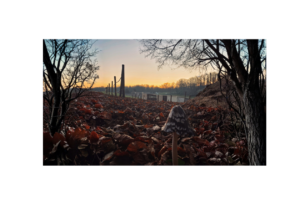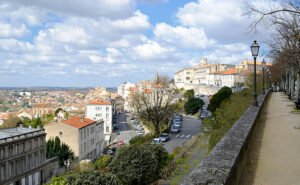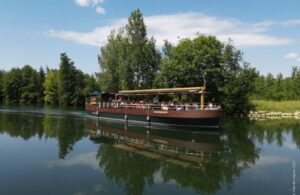
The Charente Maritime department is characterised by its natural oceanic mildness. This allows for the development of a rich ecosystem, thanks in particular to the diversity of its landscapes. Rocky terrain and limestone cliffs, as well as rocky foreshores along the coastline. Inland, where urbanisation is moderate, there are rivers that promote biodiversity, as well as marshes such as the Marais-Poitevins (Marais-Poitevin Regional Nature Park), where nature reserves help to preserve the flora and fauna of Charente-Maritime.
The diverse wildlife of our region
Air animals
Charente-Maritime, located on one of the main migration routes for wild birds, is home to a multitude of species, including water birds such as egrets, avocets and ducks, as well as birds that tend to stay inland in more remote areas. This is the case for the grey heron, which feeds directly on the banks of the Fontdouce, and the owl, which can be found in the forest of the treetop adventure park. Robins, crows, magpies, blackbirds and buzzards are also among the most numerous birds in the hinterland and can be easily spotted in the great valley of Fontdouce.
If you are curious and would like to learn more about the diversity of bird species adapted to each territory, visit the website of the League for the Protection of Birds.
Land animals
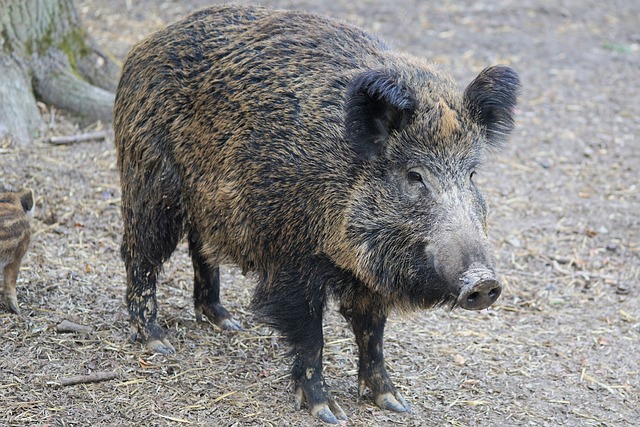
When visiting Fontdouce, you may encounter wild boars, hares or even deer as you drive through the Cognac vineyards. It should be noted that the female deer is not called a doe but a hinds. A doe is the female of a stag.
Our large oak forests are also home to numerous squirrels, who like to build their nests and reproduce high up in the trees to be safe from other mammals, without being too high up to avoid excessive exposure to the wind. The various facilities in our tree-top adventure park provide them with a lovely playground.
Water animals
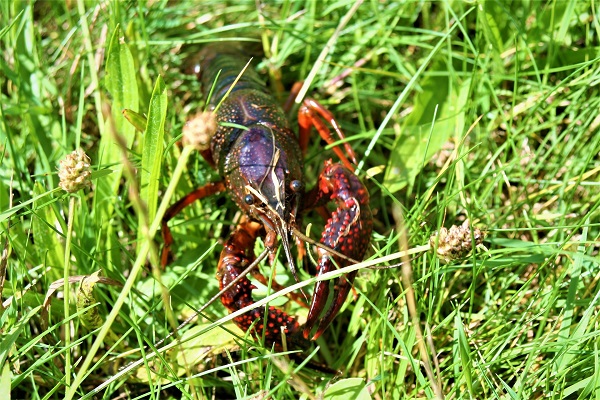
Along the Fontdouce, it is also possible to find toads, grass snakes and crayfish. As for the latter, if a water source does not suit them, they will not hesitate to move onto dry land to look for another more satisfactory water source. This is why you can find crayfish, easily recognisable by their pink/red colour, in the green grass in the middle of the Fontdouce valley, unless they have been caught by herons or birds of prey in flight.
To the delight of fishing enthusiasts, American crayfish and Louisiana crayfish, which are mainly found in Charente-Maritime, are considered pests. Fishing for them is therefore highly beneficial for our region’s ecosystem.
The vibrant flora of our region
As our region enjoys a predominantly sunny climate with moderate rainfall, a particularly rich variety of flora can thrive here more easily.
The lovely hollyhocks
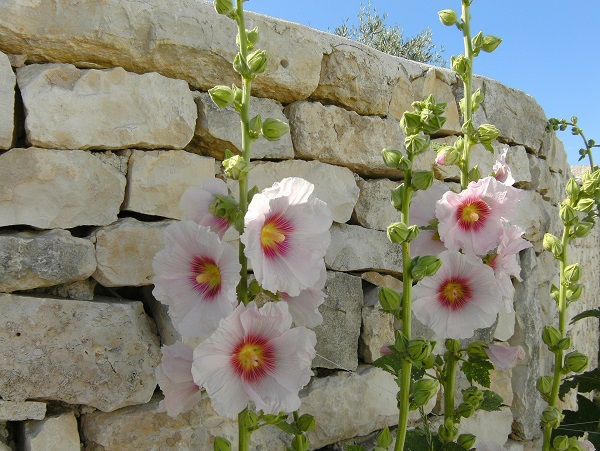
One of the typical flowers of our beautiful region is the hollyhock. Also known as the overseas rose, it grows in different shades ranging from light pink to black, including purple, yellow and mauve. The hollyhock is a perennial plant, sometimes invasive, that grows along houses or in the alleys of Charente-Maritime. Their primary characteristic is the height that certain flowers can reach. Starting at a few centimetres for the smallest and reaching up to 3 or 4 metres in height for the largest.
The beautiful Poppy
Another flower that is quite common in our region today, despite having disappeared for a while, is the poppy. At the edge of fields, along roadsides or in slightly wilder areas, poppies thrive in areas that are not treated with herbicides, or only minimally so. This sometimes invasive flower has a high reproductive capacity, as it produces a large number of seeds that are scattered by the wind, allowing it to grow back in greater numbers the following year.