Tree-climbing, An increasingly popular outdoor activity involves moving from tree to tree using suspension bridges, nets, or zip lines. Long reserved for able-bodied individuals, this activity is now becoming more inclusive, thanks in particular to specific adaptations. The opportunity for children with disabilities to participate in this type of activity is not simply a matter of accessibility. Indeed, it is also a wonderful opportunity to support their physical, mental, and especially social development. Safety, therapeutic benefits, and committed initiatives are at the heart of this inclusive approach.
Tree climbing: Safety and accessibility
One of the key factors in treetop adventure courses for children with disabilities is the implementation of enhanced safety measures and optimal accessibility to guarantee a positive and, above all, safe experience. Several elements must therefore be taken into account:
1. Adapted treetop adventure courses and specific areas
Gradually, treetop adventure parks have been able to adapt their courses to meet the needs of children with disabilities, particularly those with psychomotor disorders.
These adaptations include:
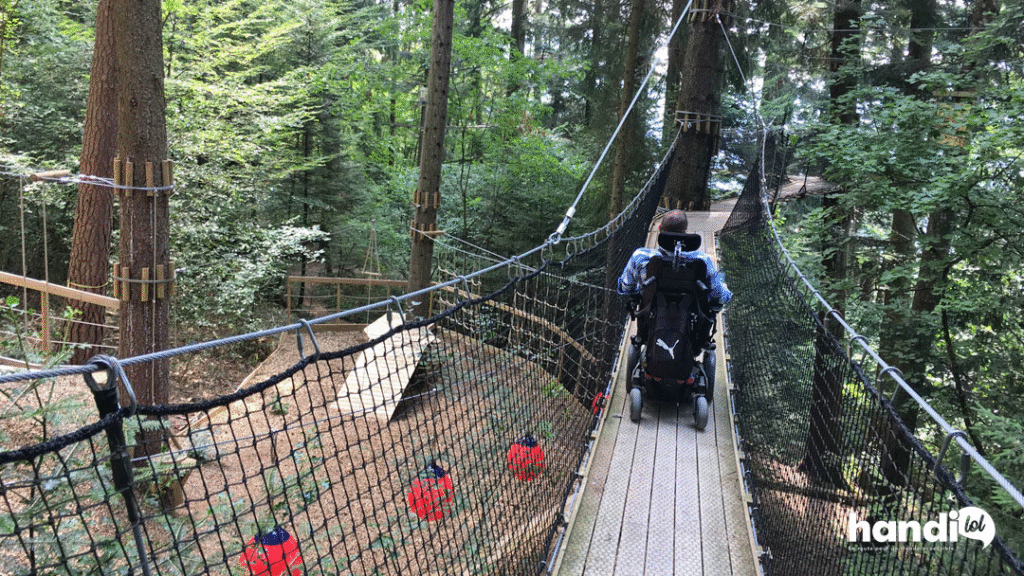
- Ground-level obstacle courses: ideal for children in wheelchairs or with mobility difficulties. These courses are designed directly on the ground and offer obstacles at ground level or at low height, providing an experience similar to that of traditional obstacle courses.
- Low-height courses: These low-height courses are designed for people who cannot climb to high altitudes. They are equipped with ramps and easily accessible passage elements while being secured with ropes and harnesses.
Several parks in France, such as the park Accro’Aventure, in Haute-Savoie or even Saint Benoit Aventure, In Vienne in France, they offer routes fully adapted for people in wheelchairs or with motor impairments.
2. Specific and secure equipment
Safety is paramount when practicing tree climbing, however, it is even more so when it involves children with disabilities.
Many suitable facilities are then offered within the parks:
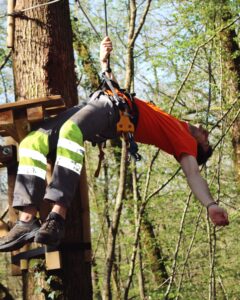
- Special harnesses: Harnesses and safety systems are specifically designed for children with special needs (motor or sensory impairments). For example, some harnesses are equipped with integrated seats, allowing children in wheelchairs to sit safely during their treetop adventure session.
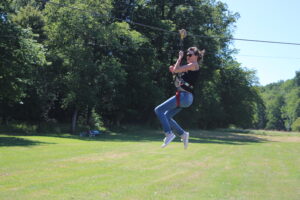
- Adapted zip lines: equipped with seats or gondolas, these zip lines are used for children who cannot stand up or are not stable enough to slide in a traditional way.
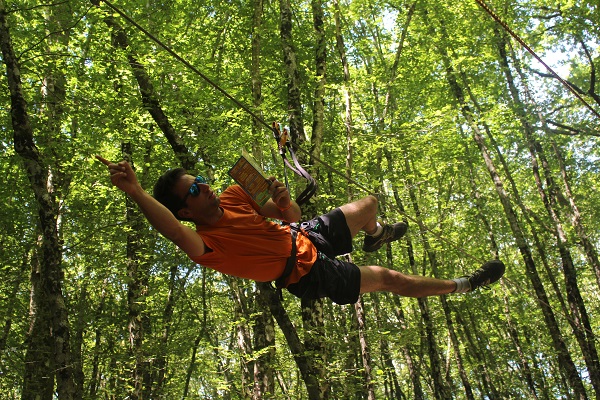
- Continuous lifeline: ensures maximum safety as it is impossible to detach during the course. This allows you to practice with complete peace of mind, without fear of panic!
3. Infrastructure Accessibility
The parks also offer suitable and easily accessible areas:
- Access to facilities: access ramps are installed, allowing easy access to the different reception areas (starting points, toilets, snacks, relaxation areas, etc.).
- Accessible signage: Braille signs and instructions, as well as visual and audio cues, are provided for children with visual or hearing impairments.
4. Staff support and training
The specialized training of instructors and the personalized support they provide are essential to ensuring the inclusivity and safety of this experience. The instructors’ role is crucial, not only because they supervise the activity, but also because they address the specific needs of children with disabilities. They receive tailored training, including support techniques adapted to the various disabilities encountered, whether sensory, motor, or cognitive, so that each child can fully enjoy their day without experiencing difficulties related to their disability.
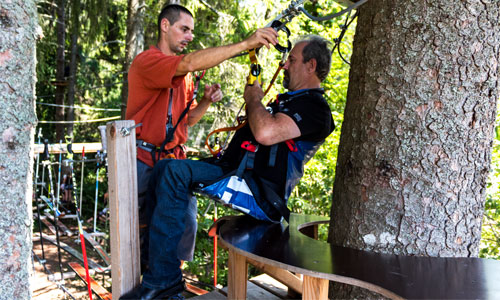
This training covers numerous topics such as child safety management, emotional support strategies (for anxiety and fear), and adapted communication (for children with autism spectrum disorders). A personalized approach can also be offered, depending on individual needs, notably by adjusting the support person to each child’s pace and abilities. This approach may include assistance in overcoming obstacles, support during the activity, or specific instructions to adapt the activities to the child’s motor skills. Individualizing this approach ensures that every child, regardless of their disability, can participate in the activity safely and feel included in the group.
The benefits of treetop adventure courses for children with disabilities
Tree climbing is an outdoor activity that engages a multitude of muscle groups and bodily systems. It offers a range of significant physical benefits, both for children’s motor development and for their general health.
- Physical benefits:
- Muscle strengthening: the movements practiced during tree climbing help to strengthen and maintain many muscles in the arms, legs, back, shoulders, trunk and also the neck!
- Cardiovascular stimulation: Physical activity leads to better heart health and increased endurance. In addition, sports activities trigger the release of endorphins (feel-good hormones), promoting a sense of well-being.
- Mental benefits:
- Stress and anxiety reduction: Nature is well known as a source of relaxation that can help with concentration and detachment from daily worries. To learn more, feel free to read our article.
- Building self-confidence: Successfully overcoming obstacles and completing challenges increases self-confidence and teaches you to manage your fears. It also involves making decisions and therefore gaining independence.
- Improving social skills: strengthens cooperation between children to overcome obstacles. This activity helps develop empathy and communication skills, and strengthens bonds of friendship and camaraderie.
For children with disabilities, treetop adventure courses transcend mere entertainment, becoming a genuine opportunity for inclusion, physical development, and strengthening social bonds. Thanks to tailored programs, specialized equipment, and individualized support, this activity offers each child the chance to enjoy a completely safe experience while pushing their own limits. The benefits are numerous, ranging from developing muscle strength and boosting self-confidence to enhancing social skills.
Adventure Park of Fontdouce, With its accessible courses and continuous belay system, Fontdouce perfectly embodies this inclusive approach, guaranteeing every child a safe and fulfilling experience. By choosing to adapt its infrastructure and train its staff, Fontdouce offers a unique experience where everyone can thrive physically and socially. This model could inspire other parks to follow this path and make treetop adventure courses accessible to an ever-wider audience.