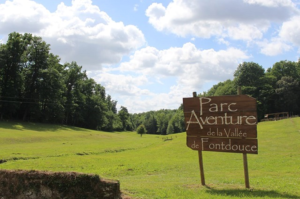
Fancy a trip to the seaside after a session of tree climbing? The town of Royan, located an hour’s drive west of Fontdouce, is the perfect place to combine history and leisure.
The history of the city
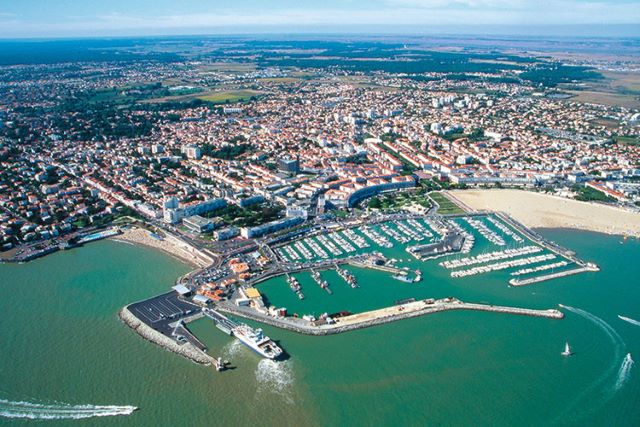
Located at the entrance to the Gironde estuary, one of the largest estuaries in Europe, the town of Royan is strategically positioned in a location that has been highly coveted since the Hundred Years’ War. It was a busy port for merchant ships and a driving force behind the development of trade. During the Wars of Religion, the Protestant town suffered numerous attacks and in 1631 even saw its castle and the jetty that bordered the town razed to the ground by Cardinal Richelieu.
In the 17th and 18th centuries, Royan prospered initially thanks to the salt trade and later with the wine and spirits trade. The port is well known for its sardine fishing, but is also famous for welcoming pilots who helped and guided ships through the estuary, which was very dangerous at the time. The port subsequently underwent a number of modifications to facilitate and secure access.
It was at the beginning of the 19th century that the town really began to flourish thanks to its seaside resort and, in particular, its sea bathing treatments, which were renowned for their therapeutic properties and health benefits. A casino was built in 1895 to attract new customers, bringing together gaming rooms, dance and music halls, as well as indoor seawater baths and more traditional hot water baths.
Royan prospered more and more, but when the Second World War broke out, the town fell into the hands of German troops on 23 June 1940. Royan was transformed, with the appearance of blockhouses, artillery and anti-landing systems on the beaches as part of the construction of the Atlantic Wall.
On 5 January 1945, Allied forces bombed the city in an attempt to liberate it, but to no avail. It was not until 18 April 1945 that German troops surrendered and left the city for good.
What remained of Royan at that point? The town was 85% destroyed, so the evacuated residents had to be rehoused and reconstruction work began very quickly in the weeks following liberation. But the question of how to rebuild the town was controversial: should it be rebuilt exactly as it was before, or modernised?
A combination of approaches will therefore be taken: anything that cannot be salvaged will be demolished and rebuilt from scratch (mainly in the city centre), while the rest will be repaired and rebuilt.
What can be found in Royan today
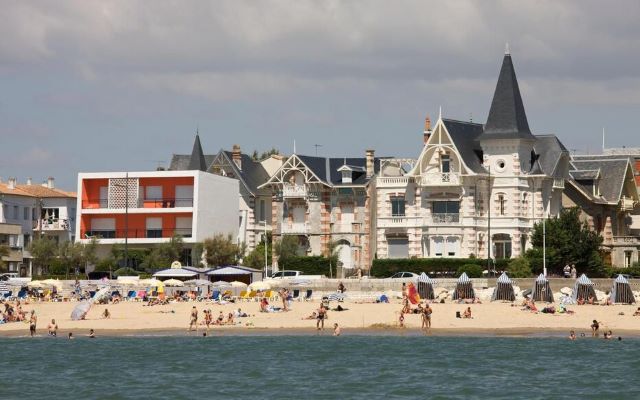
Today, the town of Royan is still known for its sea bathing, with beautiful beaches for relaxing, and for sports such as sand yachting, surfing and other water sports.
For cycling enthusiasts, there are also two cycle routes nearby: the Vélodyssée, which stretches for almost 1,300 km along the Atlantic coast, and the Canal des 2 Mers à Vélo, which covers almost 750 km and links the Atlantic Ocean and the Mediterranean Sea.
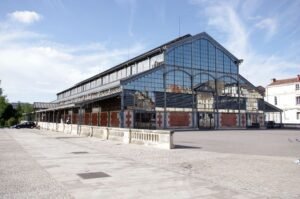
In terms of cultural visits, first up is the Royan Museum, housed in a former market building, which recounts the town’s history in detail over the years.
Next, in a monument listed as historic in 2002, you will also find the central market, rebuilt in the 1950s, which is home to nearly 200 traders.
Finally, you can also visit Notre-Dame Church, the Protestant temple, or, last but not least, Royan’s Palais des Congrès, all of which are open to visitors.
So don’t hesitate any longer and come and discover the town of Royan!